
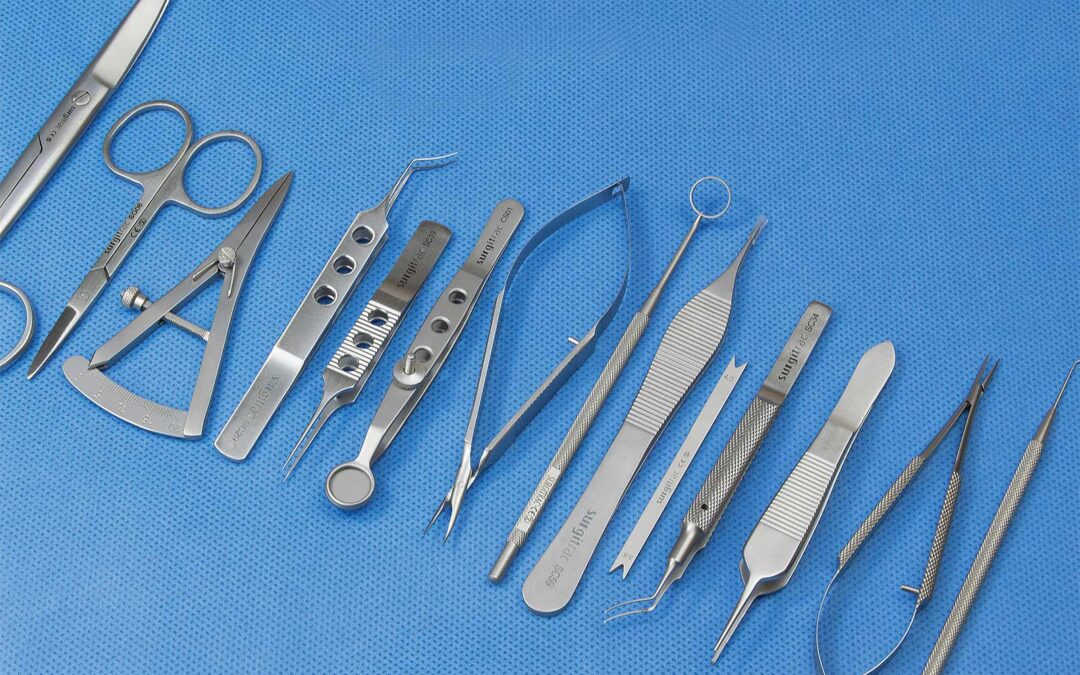
Ophthalmic surgery relies on precise instrument selection, efficient workflows and consistent procedural preparation. While individual instruments play a critical role in surgical outcomes, the way those instruments are assembled, standardised and supplied can have a significant impact on theatre efficiency, operational consistency and procurement planning.
For theatre teams, surgeons and procurement departments alike, procedure-specific instrument sets can help streamline preparation, support standardisation and improve workflow predictability across high-volume surgical environments.
Different ophthalmic procedures require different combinations of instruments, with cataract, retinal and glaucoma surgery each presenting unique clinical and operational requirements. Understanding these differences can help healthcare providers select instrument sets that align with both procedural needs and organisational objectives.
This guide explores the key considerations when evaluating instrument sets for cataract, retinal and glaucoma surgery, including workflow efficiency, procedure packs, procurement factors and the role of single-use versus reusable instruments.
Why Procedure-Specific Instrument Sets Matter
Modern ophthalmic services are under increasing pressure to improve efficiency while maintaining high standards of patient care. As surgical volumes continue to rise, particularly in cataract surgery, many healthcare providers are looking for ways to reduce variability and support consistent workflows.
Procedure-specific instrument sets can help achieve this by ensuring that the required instruments are assembled around the needs of a particular procedure.
Potential benefits include:
• Improved workflow standardisation
• Reduced setup variability
• More predictable theatre preparation
• Enhanced procedural consistency
• Support for high-volume surgical lists
• Simplified procurement planning
By aligning instruments with the requirements of specific procedures, healthcare providers can reduce unnecessary complexity while supporting operational efficiency.
Cataract Surgery Instrument Sets
Cataract surgery remains one of the most frequently performed surgical procedures worldwide and is often carried out within highly structured, high-volume environments.
As a result, cataract instrument sets are typically designed with consistency, efficiency and repeatability in mind.
A cataract instrument set may commonly include:
• Ophthalmic forceps
• Eye speculums
• Surgical scissors
• Cannulas
• Phaco-related instruments
• Irrigation and aspiration accessories
For theatre teams, standardised cataract sets can help simplify preparation and reduce setup variation between cases. For surgeons, consistency in instrument availability and configuration can help support procedural familiarity and confidence.
Many healthcare providers also utilise ophthalmic procedure packs to further streamline cataract workflows by consolidating instruments and consumables into a single sterile solution.
Retina Surgery Instrument Sets
Retinal surgery often requires highly specialised instruments designed for delicate posterior segment procedures.
Compared with cataract surgery, retinal procedures may involve greater variation in technique and therefore more specialised instrument requirements.
Retinal instrument sets may include:
• Vitreoretinal forceps
• Micro-scissors
• Retinal picks
• Membrane manipulation instruments
• Specialised illumination accessories
Because retinal procedures frequently require high levels of precision, careful specification of instrument sets is particularly important.
Theatre teams may also need to accommodate greater procedural variation compared with routine cataract workflows, making planning and standardisation key considerations.
Glaucoma Surgery Instrument Sets
Glaucoma procedures can vary significantly depending on the surgical technique being performed.
Whether supporting traditional filtration procedures or newer minimally invasive glaucoma surgery (MIGS) approaches, instrument requirements may differ considerably.
Common considerations include:
• Access requirements
• Tissue handling needs
• Surgeon-specific preferences
• Procedure complexity
• Specialised instrumentation
As a result, glaucoma instrument sets often require a more tailored approach than high-volume cataract surgery.
Healthcare providers may benefit from reviewing instrument set configurations regularly to ensure they continue to align with evolving surgical techniques and surgeon preferences.
The Role of Ophthalmic Procedure Packs
Procedure packs have become increasingly important within ophthalmic surgical workflows.
Rather than requiring theatre staff to assemble multiple individual items, procedure packs provide a pre-configured solution designed around specific procedural requirements.
Potential benefits may include:
• Improved workflow consistency
• Reduced preparation time
• Simplified stock management
• Enhanced standardisation
• Reduced setup variability
• Support for high-volume surgical lists
For theatre teams, procedure packs can help create more predictable workflows while reducing the administrative burden associated with preparing individual components.
From a procurement perspective, procedure packs may also support greater consistency across departments and surgical sites.
Single-Use vs Reusable Instrument Set Considerations
When evaluating instrument sets, healthcare providers often consider whether single-use, reusable or hybrid approaches are most appropriate for their environment.
Single-Use Considerations
Single-use ophthalmic instruments may offer:
• Sterile readiness
• Consistent instrument availability
• Simplified workflow management
• Reduced reprocessing requirements
• Enhanced traceability
In high-volume environments, reducing reliance on instrument turnaround schedules may support workflow efficiency and operational consistency.
Reusable Considerations
Reusable instruments remain widely used across ophthalmology and may offer advantages including:
• Long-term familiarity
• Established surgical preference
• Repeat usability
However, reusable instruments also require:
• Sterilisation
• Inspection
• Maintenance
• Reprocessing capacity
Many healthcare providers adopt hybrid approaches that balance the advantages of both models depending on procedural requirements and operational priorities.
Clinical Usability and Surgeon Preference
While procurement and operational factors are important, surgeon usability remains a critical consideration when evaluating instrument sets.
Factors influencing surgeon preference may include:
• Ergonomics
• Instrument balance
• Handling characteristics
• Familiarity
• Consistency across procedures
Particularly during long surgical lists, consistency in instrument feel and performance can contribute to procedural confidence and efficiency.
For theatre teams, standardisation can also help support smoother preparation and reduce variation between procedures.
Procurement and Operational Considerations
Instrument set selection is increasingly viewed as both a clinical and operational decision.
Procurement teams may evaluate factors including:
• Supply reliability
• Consistent specifications
• CE marking
• Availability of Instructions for Use
• Stock continuity
• Supplier responsiveness
• Regulatory compliance
Reliable supply is often a particularly important consideration. Instrument standardisation can only be effective if healthcare providers have confidence that products will be available when required.
This is especially relevant within high-volume ophthalmic services where procedural delays can create operational challenges.
A Practical Evaluation Checklist for Ophthalmic Instrument Sets
When evaluating ophthalmic instrument sets, procurement teams, surgeons and theatre staff may wish to consider the following:
Clinical Suitability
• Is the set appropriate for the intended procedure?
• Does the configuration align with surgeon preference?
• Are specialist instruments required?
Workflow Efficiency
• Would procedure packs simplify preparation?
• Is theatre turnaround efficiency a priority?
• Would sterile ready-to-use instruments support workflow consistency?
Procurement & Compliance
• Are instruments CE marked?
• Is documentation readily available?
• Can supply continuity be maintained?
• Are specifications consistent between orders?
Operational Fit
• Would a hybrid reusable/single-use model be appropriate?
• Is sterile services capacity under pressure?
• Are high-volume surgical lists influencing workflow decisions?
Supporting Efficient Ophthalmic Surgical Workflows
Surgitrac supports ophthalmic providers through a range of ophthalmic procedure packs, single-use and reusable ophthalmic instruments, and workflow-focused solutions designed for modern surgical environments.
With recognised compliance standards, consistent instrument specifications and a commitment to reliable supply, Surgitrac supports healthcare providers across a broad range of ophthalmic procedures.
Theatre teams, procurement departments and surgeons often see the difference in procedural consistency, workflow efficiency and reliable availability when using well-matched ophthalmic instrument solutions across high-volume surgical environments.
Talk to a Clinical Specialist about improving procedural efficiency.


