
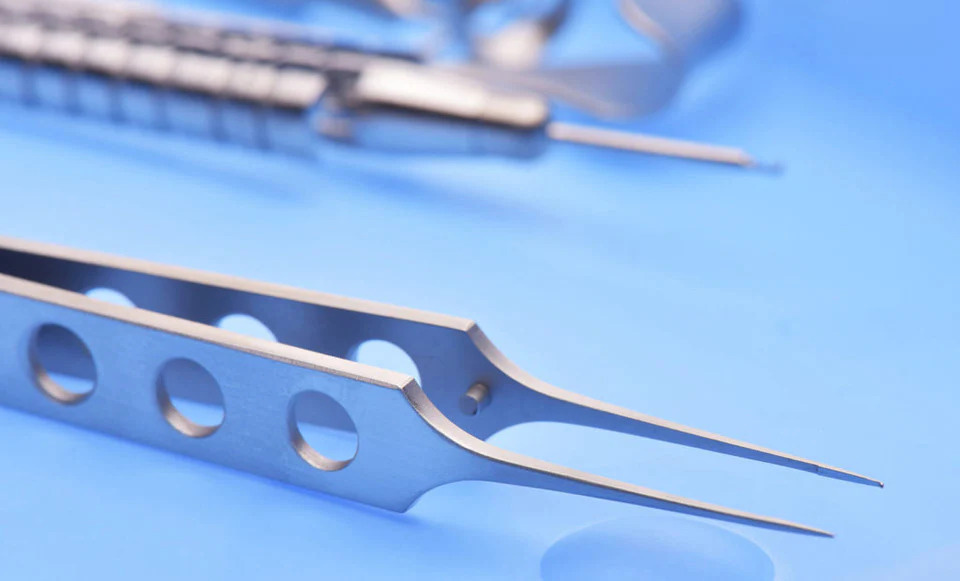
In the high-volume, high-precision world of ophthalmic surgery, procurement decisions are rarely simple. The debate regarding single-use vs reusable ophthalmic instruments has moved beyond simple unit price comparisons. Today, it encompasses a complex matrix of operational efficiency, regulatory compliance, and clinical risk management.
For procurement managers, theatre leads, and clinic owners, the challenge lies in balancing the total cost of ownership (TCO) with the imperative for patient safety and supply chain reliability. As regulatory scrutiny tightens under frameworks like the EU MDR and UK regulations, the burden of proof for sterility and traceability has shifted, prompting many organisations to re-evaluate their instrument strategies.
This article examines the critical factors – cost, compliance, and risk – to support an evidence-based approach to instrument procurement.

Why this decision matters in modern ophthalmic surgery
Ophthalmology is unique in its throughput. Procedures such as cataract surgery are among the most frequently performed surgeries globally, demanding exceptional efficiency from operating theatres.
In this environment, a delay caused by a rejected instrument tray or a failure in the sterilisation supply chain can disrupt an entire day’s list. Furthermore, the microscopic nature of ophthalmic surgery means that even microscopic debris or damage to an instrument can have catastrophic consequences for visual outcomes.
The decision between single-use and reusable instruments is therefore not just a financial one; it is a strategic operational decision that impacts:
- Throughput capacity: How fast can the theatre turn around between patients?
- Regulatory burden: How much resource is required to document compliance?
- Supply continuity: How resilient is the department to sterilisation downtime?
Cost considerations: Upfront price vs lifecycle cost
When evaluating ophthalmic surgical instrument costs, it is essential to distinguish between the purchase price and the lifecycle cost.
Reusable instruments: The hidden costs
While a reusable stainless-steel instrument may appear cost-effective when amortised over hundreds of uses, the Total Cost of Ownership (TCO) includes significant variable costs. These include:
- Reprocessing: Staff labour, water, energy, and detergent costs associated with decontamination.
- Logistics: Transport to and from sterile service departments (SSD), particularly if off-site.
- Maintenance: Sharpening, repair, and eventual replacement of damaged goods.
- Loss and theft: The cost of replacing instruments that go missing during the reprocessing cycle.
A 2024 study published in the New Zealand Medical Journal analysed the costs of intravitreal injections and found that while reusable instruments were calculated to be marginally cheaper per case in that specific setting (saving approximately NZ$1.51 per patient), the calculation relied heavily on specific assumptions regarding labour rates and instrument longevity. In regions with higher labour costs or stricter decontamination protocols, the economic advantage of reusables can diminish rapidly.
Single-use instruments: Predictability and transparency
Single-use ophthalmic instruments offer a different financial model:
- Fixed costs: The cost per procedure is known and unvarying.
- Elimination of CapEx: No significant upfront capital expenditure is required to stock instrument sets.
- Simplified billing: Costs can be directly attributed to specific procedures or patients, aiding in private clinic billing transparency.
For many organisations, the value of single-use lies in budget predictability. There are no surprise repair bills or urgent replacement costs if a tray is dropped.
Compliance and regulatory considerations
The regulatory landscape for medical devices is becoming increasingly rigorous. Under current standards, the responsibility for ensuring an instrument is sterile and safe for use is shared between the manufacturer and the healthcare provider.
The reprocessing workload
For reusable instruments, the healthcare provider must adhere strictly to the manufacturer’s Instructions For Use (IFU). ISO 17664 specifies the information manufacturers must provide regarding the processing of medical devices. If a hospital cannot replicate the exact cleaning and sterilisation cycle validated by the manufacturer, they are technically non-compliant.
Furthermore, guidance such as the NHS Health Technical Memorandum (HTM) 01-01 places a heavy emphasis on management, validation, and traceability. Every cycle of the autoclave must be logged, and every instrument tray tracked to the patient. This administrative burden represents a significant “invisible” workload for QA and theatre teams.
The single-use advantage
With single-use instruments, the burden of sterilisation validation remains with the manufacturer. When purchasing from a reputable supplier, the facility receives a sterile, CE-marked device that meets ISO 13485 quality standards. The documentation trail is simplified to the batch number recorded in the patient notes, significantly reducing the internal compliance workload.
Infection control and risk management
Infection control remains the primary clinical driver in the single-use vs reusable debate. In ophthalmology, the risks of Endophthalmitis and Toxic Anterior Segment Syndrome (TASS) are of particular concern.
Cross-contamination risks
Reusable instruments, particularly those with narrow lumens (such as phacoemulsification tips or cannulas), present a decontamination challenge. Biological debris can become trapped inside, and if not removed during the cleaning phase, sterilisation alone may not be sufficient to render the instrument safe. The CDC Guideline for Disinfection and Sterilization in Healthcare Facilities emphasises that “cleaning is critical,” noting that inorganic and organic materials that remain on surfaces interfere with the effectiveness of disinfection and sterilisation.
Eliminating the variable
Single-use ophthalmic instruments eliminate the variable of reprocessing quality. Each instrument is pristine and used only once. This strategy is often considered effective in reducing the risk of cross-contamination, particularly regarding prion diseases (like CJD) which are resistant to standard sterilisation methods.
By removing the reliance on the local sterile services department (SSD) to perfectly clean delicate micro-surgical instruments every time, the theatre manager removes a critical point of potential failure.
Operational efficiency and theatre workflow
For high-volume clinics and NHS trusts tackling waiting list backlogs, operational flow is critical.
Reusable bottlenecks:
- Downtime: Waiting for autoclaves or instrument deliveries can halt lists.
- Quality checks: Staff must inspect every reusable instrument for damage, burrs, or debris before use, taking valuable time.
- Wet packs/torn wraps: If a reusable tray arrives with compromised packaging (e.g., wet or torn), the entire set must be rejected, causing immediate delays.
Single-use efficiency:
- Immediate availability: Stock is kept on the shelf, ready for immediate use.
- Stock management: Procedure packs (containing drapes, speculums, and instruments) allow for a “rip and go” workflow, significantly reducing setup time between cases.
- Consistency: Surgeons receive a brand-new instrument with optimal sharpness and functionality every time, reducing intra-operative frustration.
When reusable instruments may still be appropriate
Despite the advantages of single-use, reusable instruments remain a viable and necessary part of ophthalmic surgery.
- Complex/Niche Procedures: For specialised surgeries where volume is low, high-quality reusable sets may be the only available option.
- Surgeon Preference: Some surgeons prefer the specific weight, balance, or tactile feedback of certain reusable heavy-metal alloys, although single-use manufacturing quality has improved drastically in recent years.
- Sustainability Goals: While single-use involves plastic waste, reusables involve significant water, chemical, and energy consumption. Organisations with specific waste-reduction targets may prioritise reusables, provided they can manage the associated energy costs.
Making the right choice for your organisation
There is no single “correct” answer for every facility. The choice between single-use and reusable instruments depends on organisational priorities:
- Private Clinics: Often favour single-use for cost transparency, guaranteed availability, and the elimination of on-site sterilisation overheads.
- Large Teaching Hospitals: May utilise a hybrid model, using reusables for standard sets and single-use for difficult-to-clean items (like cannulas) or high-volume cataract lists.
Key questions to ask during procurement include:
- Do we have the capacity to reprocess instruments to ISO 17664 standards consistently?
- What is our true cost of reprocessing (including labour and error rates)?
- How often are lists delayed by instrument unavailability?
- What is our risk tolerance regarding cross-contamination?
How Surgitrac supports informed decision-making
Surgitrac understands that procurement is about partnership and transparency. We are a manufacturer and distributor committed to helping healthcare providers maintain continuous, safe, and efficient surgical services.
We support your procurement strategy through:
- Quality Assurance: Our manufacturing facilities are ISO 13485:2016 certified, ensuring rigorous quality control.
- Compliance: All Surgitrac products are CE-marked and compliant with international standards.
- Supply Reliability: With UK-based warehousing and a robust supply chain, we help mitigate the risks of stockouts.
- Flexibility: We offer a comprehensive range of single-use and reusable ophthalmic instruments, as well as ophthalmic procedure packs, allowing you to build a solution that fits your specific workflow.
Whether you are looking to transition fully to single-use or adopt a hybrid model, our team can provide the technical specifications and supply guarantees you need.Contact our team to discuss your instrument requirements.


